WOLF-3576
Block Diagram
The block diagram shows the Ada AD107 GPU connected to the XMC P15 connector via PCIe Gen4 x8, with three GPU display links routed through optional DP++/DVI circuitry to XMC P16 as VID1/VID2/VID3, alongside GDDR6 frame buffer and board power regulation.
Overview
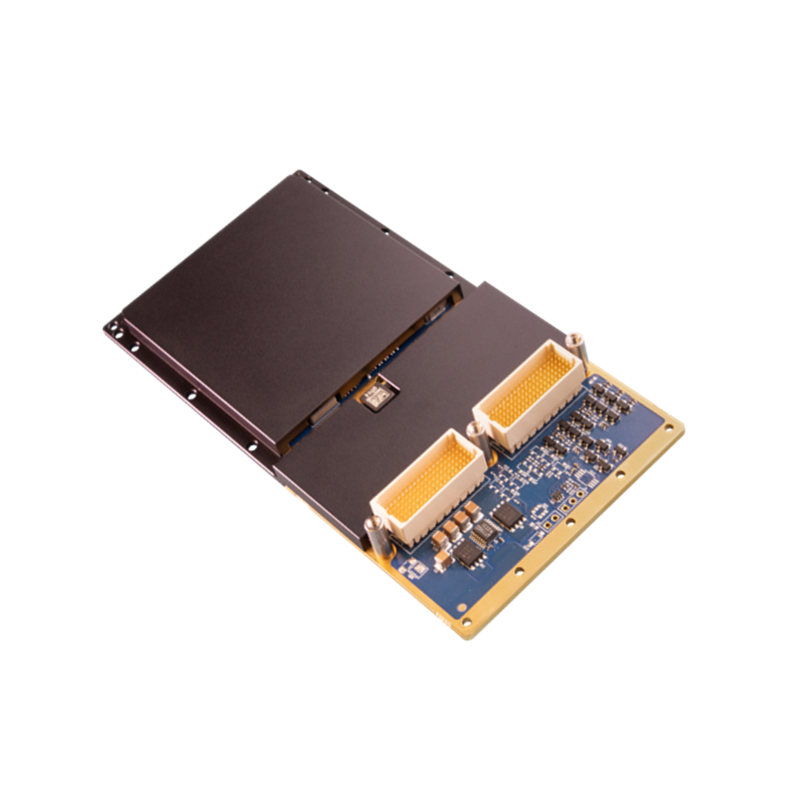
NVIDIA RTX 2000 Ada XMC with 3 Video Outputs
The XMC-AD2000E-VO module integrates an NVIDIA RTX™ 2000 (AD107) Ada embedded GPU on a single-width XMC mezzanine, providing a compact GPU accelerator for embedded visualization, video encode/decode, and AI inference workloads.
Host data is delivered to the GPU over a PCIe Gen4 x8 interface, processed on the Ada architecture CUDA/Tensor/RT cores, and then routed out through up to three simultaneous video outputs. The default output type is DisplayPort++ 1.4, with configuration options to support HDMI or DVI through component population changes.
The module includes 8 GB of GDDR6 (128-bit) graphics memory with up to 256 GB/s bandwidth, and supports a configurable operating power range intended for thermally constrained environments while still enabling higher performance points when platform power and cooling allow.
Features
WOLF-3576 is a rugged XMC module that integrates an NVIDIA RTX 2000 Ada (AD107) embedded GPU to provide embedded graphics, encoding, and AI inference with up to 3 simultaneous video outputs. It supports DisplayPort++ (default), HDMI, and DVI output options and includes 8 GB GDDR6 128-bit memory. Host connectivity is provided over a PCIe Gen4 x8 interface.
Video Output
- Up to 3 simultaneous video outputs
- DisplayPort++ 1.4 (default)
- 4K @ 120 Hz / 5K @ 60 Hz, 10-bit color depth
- Options for HDMI or DVI via component population changes
Connectivity / Software
- PCIe Gen4 x8 host interface
- Linux and Windows drivers available
- Host CPU support requirement: Intel E/S/H/H35 class, AMD H/HS class
Mechanical / Ruggedization
- Rugged conduction cooled (CC)
- Operating temperature: -40°C to +70°C standard (operational max: TBD)
- Vibration (sine): 10G peak (5–2000 Hz)
- Shock: 40G peak (conduction cooled)
- Dimensions (CC): 143.75 mm x 74 mm x 13.5 mm
- VITA 46.9 VPX I/O mapping patterns supported: X12d, X8d, X16s
Specifications
Key configuration and performance parameters for WOLF-3576 are summarized below for quick comparison. Values shown reflect the standard module configuration; contact WOLF if you need a tailored build or a specific payload profile.
Configuration Guide
Configuration options for the XMC-AD2000E-VO include:
- Display interface population (DP++ default; HDMI/DVI options)
- Conformal coatings
- XMC 1.0 / XMC 2.0 / XMC+ (ANSI/VITA 88) via component population changes
- Maximum power configuration options
- Variant locking
Contact WOLF to determine the appropriate configuration for your system.
Related Products
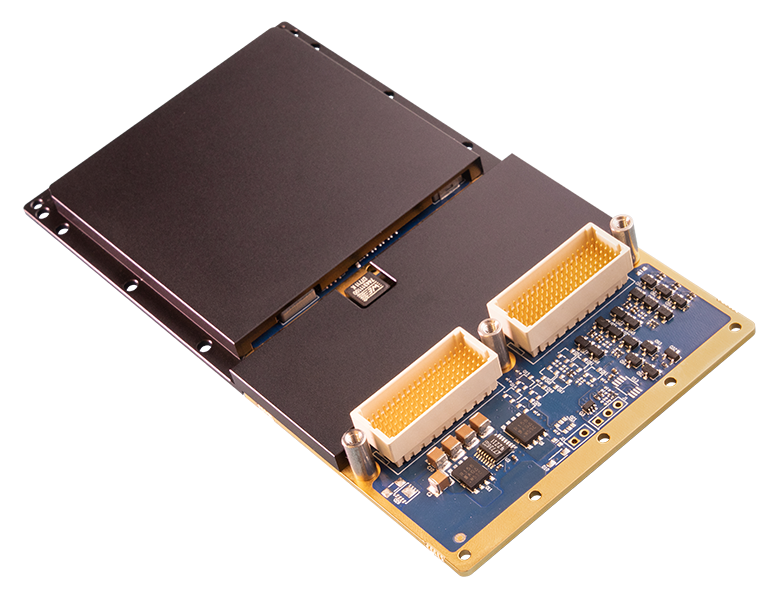
- NVIDIA RTX A2000E (GA107)
- 2560 CUDA Cores, 80 Tensor Cores
- 8 GB GDDR6 VRAM
- PCIe Gen 4 x8
- N/A
- Module power 26–50 W
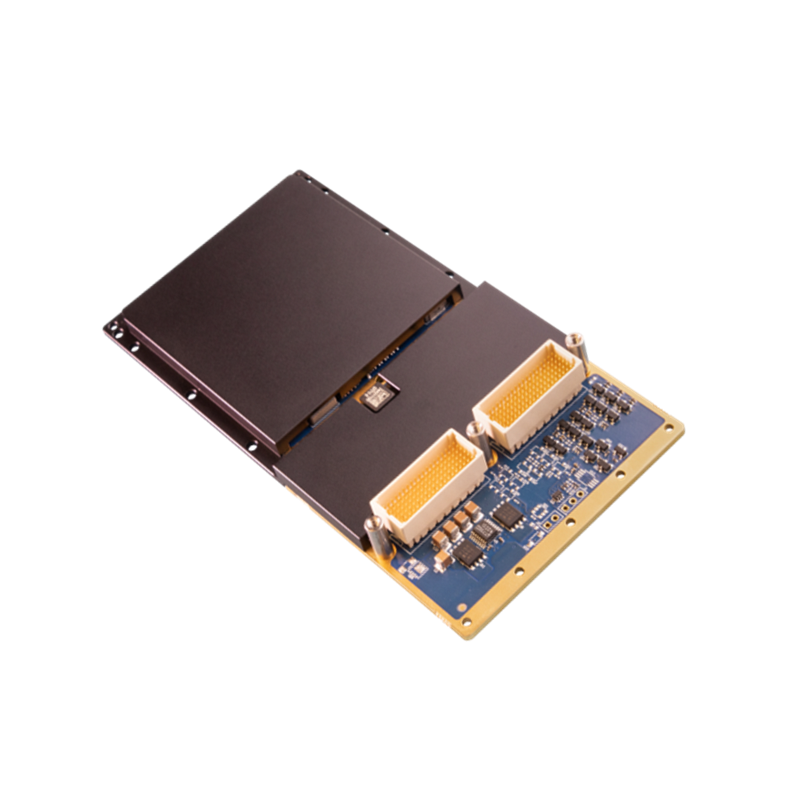
- NVIDIA RTX 500 Blackwell (GB203)
- 1792 CUDA Cores, 56 Tensor Cores
- 6 GB GDDR7 VRAM
- PCIe Gen 4 x8 (Gen 5 capable)
- N/A
- Module power 30–60 W
FAQ
Choose WOLF-3576 when you need an XMC GPU module with stronger Ada-generation compute capability than an RTX A2000-class module, while staying within a compact and thermally constrained mezzanine form factor.
This module is typically selected when:
- You need RTX 2000 Ada GPU performance for embedded graphics, encode/decode, and AI inference
- You need up to 3 simultaneous video outputs
- You want 8 GB GDDR6 memory with a 128-bit interface
- You need PCIe Gen4 x8 host connectivity
- You want a higher-performance option than WOLF-3476, but do not need a larger VPX GPU module
If your priority is the lowest power Blackwell XMC option with 6 GB memory, WOLF-3696 may be a better fit. If your platform is already qualified around Ampere A2000, WOLF-3476 may be simpler for sustainment.
Confirm the display plan early because XMC video output depends heavily on carrier routing and connectorization.
WOLF-3576 supports:
- Up to 3 simultaneous video outputs
- DisplayPort++ 1.4 by default
- 4K at 120 Hz or 5K at 60 Hz with 10-bit color depth
- HDMI or DVI options through component population changes
Integration checks to confirm early:
- Whether your carrier routes all 3 display links from XMC P16
- Whether the system needs DisplayPort++, HDMI, DVI, or a mix of outputs
- Whether the display outputs are routed to a front panel, rear I/O, or a carrier breakout
- Whether downstream displays require specific resolution, refresh rate, or color-depth support
Locking the display interface mix early helps avoid carrier rework and late-stage cabling changes.
Confirm these early for predictable bring-up:
- PCIe interface: PCIe Gen4 x8 to the XMC connector
- Carrier compatibility: confirm support for the required XMC connector option, such as XMC 1.0, XMC 2.0, or XMC+
- I/O mapping: confirm the carrier supports the required VITA 46.9 mapping pattern, such as X12d, X8d, or X16s
- Driver support: Linux and Windows drivers are available
- Host CPU support: confirm the platform meets the NVIDIA host CPU support requirement, such as Intel E/S/H/H35 class or AMD H/HS class
For XMC GPU modules, the biggest integration risks are carrier PCIe capability, display routing, and host platform compatibility.
The key ordering-time decisions are usually driven by carrier compatibility, power, and display routing:
- Display interface population: DisplayPort++ default, with HDMI and DVI options by component population changes
- XMC connector type: XMC 1.0, XMC 2.0, or XMC+ depending on carrier requirements
- Maximum power configuration: choose a power setting in the 25W to 50W range that matches platform thermal headroom
- Conformal coating: supports environmental robustness for deployed systems
- Variant locking: supports configuration control for qualified or repeat-build programs
Contact WOLF to determine the appropriate configuration for your system.